
Cleaning up tree branches is defined as the systematic removal of fallen, dead, or overgrown limbs to protect property, prevent injury, and maintain tree health. California homeowners face this task after winter storms, Santa Ana wind events, and routine seasonal maintenance. The International Society of Arboriculture (ISA) recognizes proper branch removal, technically called pruning or limb clearance, as a core practice in residential arboriculture. Done correctly, it protects your trees from decay and your property from liability. Done carelessly, it causes serious injury and long-term tree damage.
How do you assess hazards before cleaning up tree branches?
Hazard assessment is the first and most critical step before any cleanup begins. Rushing cleanup without assessment dramatically increases injury risk. Photograph the entire scene before touching anything. This documentation also supports insurance claims if storm damage is involved.
Walk the perimeter of the affected area and look up before you look down. Branches lodged in the canopy above you are called “widow makers.” These are partially broken limbs held in place by other branches. They can fall without warning, sometimes days after a storm. Identify every one before you step underneath.
Look for these specific warning signs during your visual inventory:
- Branches bowing downward under their own weight or from debris load
- Limbs leaning against fences, rooflines, or utility lines
- Branches with visible cracks at the union point with the trunk
- Any debris within 10 feet of a power line
Never touch branches that are in contact with or near power lines. Contact your utility provider first. In California, Pacific Gas and Electric (PG&E) and Southern California Edison both offer emergency line clearance services. Treat any branch near a line as energized until confirmed otherwise.
Pro Tip: Take a short video walking around the entire tree before cleanup. Courts and insurance adjusters accept video documentation more readily than photos alone, and it captures hazards from multiple angles.
What tools and equipment do you need to safely remove fallen branches?
The right tool for the job is determined by branch diameter, not by what you already own. Using an undersized tool on a large branch forces you to apply more body pressure, which increases the chance of slipping and losing control.
Safety gear (non-negotiable)
- Cut-resistant gloves rated for chainsaw or hand-tool use
- ANSI Z87.1-rated safety glasses or a full face shield
- A hard hat, especially when working under a canopy
- Steel-toed boots with ankle support
- High-visibility vest if working near a road or driveway
Cutting tools by branch size
| Branch diameter | Recommended tool | Notes |
|---|---|---|
| Under 1 inch | Bypass pruning shears | Clean cuts on live wood |
| 1–2 inches | Loppers | Extended reach, less fatigue |
| 2–4 inches | Folding handsaw or pruning saw | More control than a chainsaw |
| 4+ inches | Chainsaw or pole saw | Requires training and full PPE |
| High branches | Pole saw (manual or powered) | Avoids ladder use entirely |
Ladder use deserves its own caution. Avoid climbing a ladder while holding a chainsaw. The combination of an unstable base, a running blade, and a branch under tension is a leading cause of serious DIY injury. A pole saw keeps your feet on the ground and your body out of the drop zone.
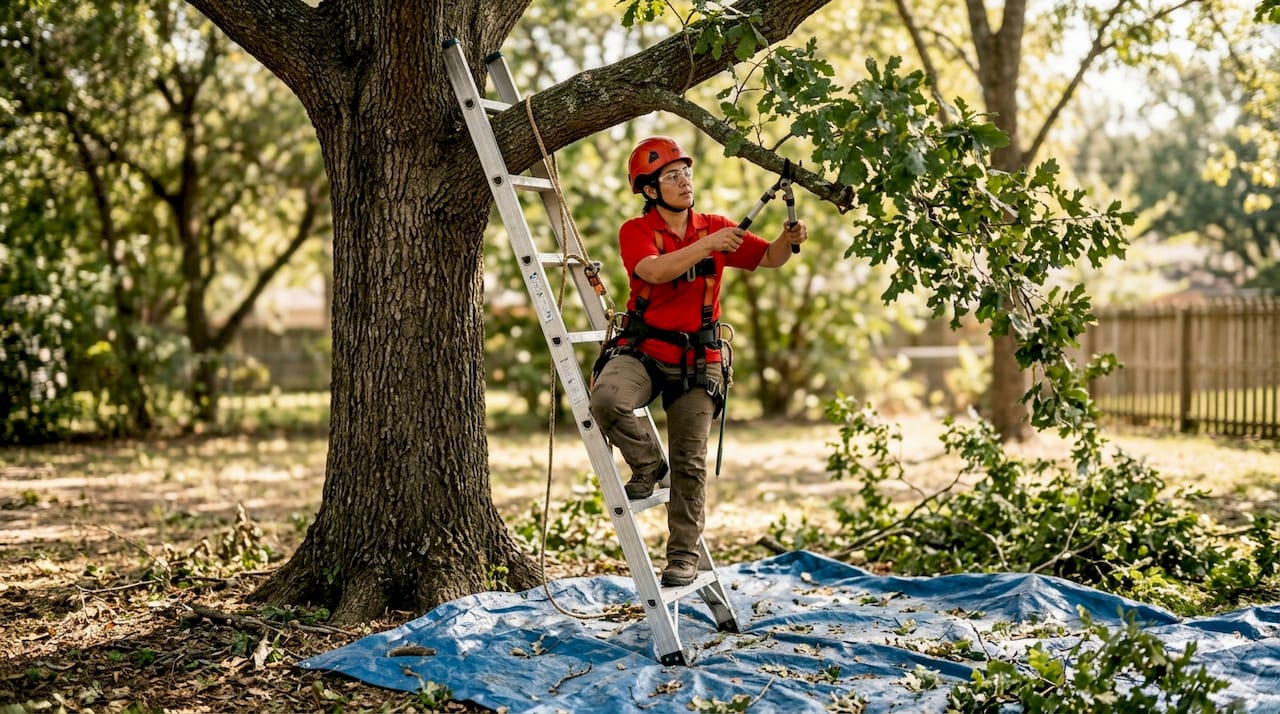
When a job requires a bucket truck or crane, that is a professional-only situation. No homeowner tool rental covers the training needed to operate aerial equipment safely near structures or lines.
Pro Tip: Clean and oil your cutting tools before and after each use. A dull blade requires more force, which means less control. A sharp pruning saw cuts with the pull stroke, not the push.
How to cut and remove fallen or overgrown tree branches safely
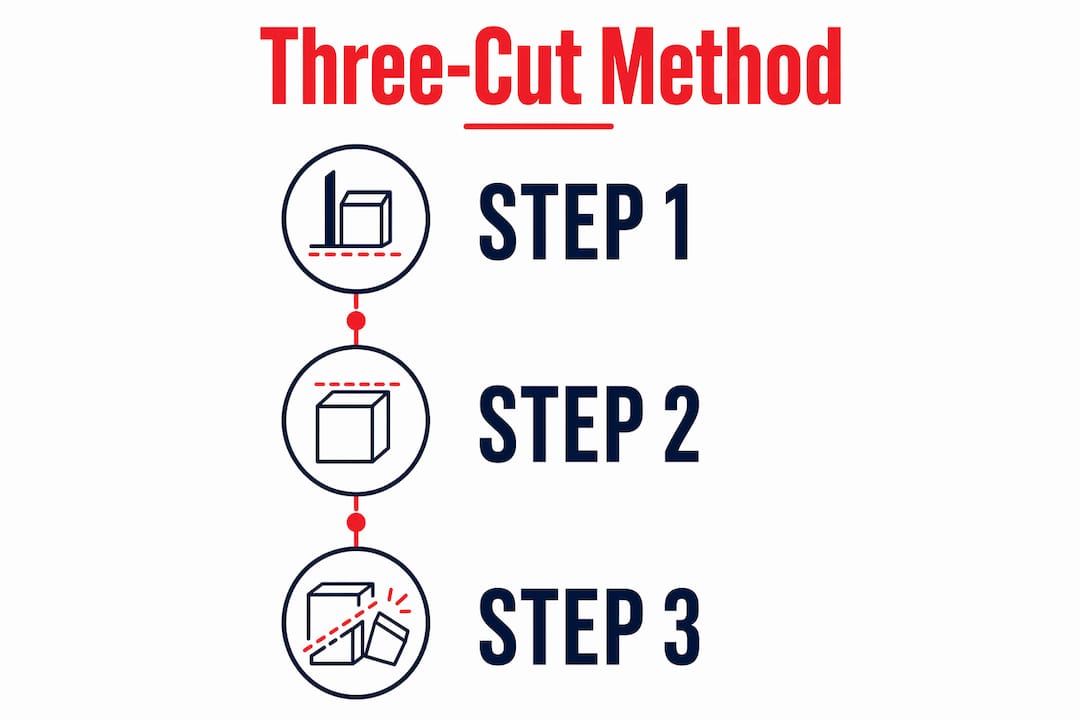
Correct cutting technique protects both you and the tree. The ISA-recommended method is the three-cut pruning technique, which prevents bark tearing and decay.
The three-cut method, step by step
- Make the first cut (the undercut) on the underside of the branch, about 12 inches from the trunk. Cut upward about one-third of the way through the branch.
- Make the second cut (the top cut) on the upper side of the branch, about 1–2 inches further out from the undercut. Cut downward until the branch falls away. The undercut prevents the bark from stripping back toward the trunk.
- Make the final cut just outside the branch collar. The branch collar is the slightly swollen ring of tissue where the branch meets the trunk. This tissue seals the wound. Never cut flush with the trunk, and never leave a long stub.
Never remove more than 25% of a tree’s canopy in a single session. Removing too much at once stresses the tree and triggers weak, fast-growing sprout growth that is structurally inferior to the original branch structure.
Branches under tension store kinetic energy. When you cut through that tension, the branch can whip back violently in the opposite direction of what you expect. Always identify which direction a branch is loaded before making any cut. Stand to the side, never in the path of the expected movement. Cutting under tension is one of the most common causes of serious DIY injury during storm cleanup.
Water-logged wood from storms is significantly heavier than dry wood. Cut large limbs into 3–4 foot sections before moving them. This reduces the load per piece and lowers the risk of back injury or losing control of the material.
Set up a clear work zone before you start cutting. Mark an escape route, which is a clear path at a 45-degree angle away from the expected fall direction. Keep bystanders and pets at least twice the length of the branch away from the work area.
Pro Tip: Evaluate the weight distribution and lean of a branch before cutting. A branch that leans left will fall left when cut. Knowing this in advance lets you position yourself correctly and plan your escape route.
Topping a tree is never an acceptable pruning method. It removes the main structural branches and triggers weak regrowth that breaks easily in future storms. California arborists and the ISA both classify topping as harmful to long-term tree structure and lifespan.
What are the best methods to dispose of tree branches after cleanup?
Tree branch disposal methods vary by volume, local regulation, and your available time. California counties have specific rules about yard waste, and some municipalities restrict open burning entirely. Choose your disposal method before you start cutting so you have a plan for the debris as it accumulates.
Disposal method comparison
| Method | Cost | Environmental impact | Effort required |
|---|---|---|---|
| Curbside yard waste pickup | Low to none | Low (composted by city) | Low |
| Drop-off at green waste facility | Low | Low | Medium |
| Wood chipper rental | Medium | Very low (mulch reuse) | High |
| Hire a chipper service | Medium to high | Very low | Low |
| Brush pile for wildlife habitat | Free | Positive | Low |
| Firewood splitting and storage | Free | Neutral | High |
| Permitted open burning | Free | High (smoke, fire risk) | Medium |
| Professional debris removal | Medium to high | Low | Very low |
Curbside pickup is the most practical option for small to medium volumes. Most California cities accept bundled branches up to 4 feet in length and 6 inches in diameter. Check your local waste management provider for bundle size and weight limits before you stack debris at the curb.
Mulching is the highest-value option for larger volumes. A rented wood chipper converts branches into mulch you can spread around garden beds, reducing water evaporation and suppressing weeds. Many tool rental outlets in California offer chippers by the half-day or full day.
Brush piles placed in a back corner of your property provide shelter for birds, lizards, and beneficial insects. This is a recognized practice in California wildlife habitat gardening and costs nothing.
Open burning is restricted or prohibited in most California counties, particularly during fire season. Check with your local air quality management district before burning any yard debris. Violations carry fines, and the fire risk during dry months is significant.
For large volumes after a major storm, professional yard debris removal is the fastest and most reliable option. A professional crew handles loading, hauling, and disposal in compliance with local regulations.
When should you hire professional tree services instead of doing it yourself?
DIY tree cleanup is appropriate only for small, loose branches under 4 inches in diameter that are away from power lines, structures, and visible tension. Every other scenario warrants a professional assessment.
Call a certified arborist or professional removal service when:
- Any branch is within 10 feet of a power line
- The limb is larger than 4 inches in diameter
- The tree is over 20 feet tall and requires climbing or aerial equipment
- A branch has fallen onto a roof, fence, or vehicle
- The tree shows signs of internal decay, leaning, or root instability
- You cannot clearly identify the direction of tension in a branch
Fallen branches can indicate internal decay or root instability that is not visible from the surface. Clearing debris without an arborist evaluation leaves the underlying hazard in place. A certified arborist carries ISA credentials and liability insurance. Verify both before hiring.
Fast removal of storm debris reduces long-term costs. Delays allow rot and insect infestation to spread into the remaining tree structure, which increases the scope and cost of future work. Treat post-storm cleanup as time-sensitive hazard control, not a weekend project to schedule at convenience.
Professional services also coordinate directly with insurance adjusters and can provide written damage assessments. For large property cleanup that goes beyond tree debris, services like backyard structure removal from Thejunkday complement arborist work by handling the non-tree debris that accumulates after storm events.
Key Takeaways
Safe and effective tree branch cleanup requires hazard assessment first, correct cutting technique second, and a planned disposal method third.
| Point | Details |
|---|---|
| Assess before you act | Photograph the scene, identify widow makers, and check for power line proximity before touching any debris. |
| Use the three-cut method | Undercut, top cut, then final cut at the branch collar to prevent bark tearing and promote healing. |
| Limit DIY to small branches | Branches under 4 inches in diameter, away from lines and structures, are the safe threshold for homeowner cleanup. |
| Plan disposal in advance | Choose curbside pickup, mulching, or professional removal before cutting so debris does not accumulate without a destination. |
| Hire professionals for hazardous conditions | Large limbs, power line proximity, structural damage, and signs of decay all require ISA-certified arborist involvement. |
What I’ve learned from watching homeowners rush this job
The most consistent mistake I see is skipping the hazard walk. Homeowners see a pile of branches on the lawn and go straight for the chainsaw. The branch on the ground is not the problem. The half-broken limb hanging 30 feet above it is. That sequence, ground debris first, canopy check never, is how people get hurt.
The second mistake is underestimating wood weight after a storm. Wet wood is dense. A branch that looks manageable from a distance can weigh several hundred pounds. Cutting it in one piece and then trying to drag it creates back injuries and property damage that would not have happened with a methodical sectioning approach.
The third mistake is topping. I have seen homeowners top trees after storm damage because it looks like a quick fix. It is not. It creates a structurally compromised tree that fails faster in the next storm. The ISA has been clear on this for decades, and the evidence in California’s post-storm tree failure data supports it.
Know your limits. A sharp pruning saw and a clear head are enough for most small-branch cleanup. For anything larger, the cost of a professional is far less than the cost of an emergency room visit or a damaged roof.
— thejunk
Thejunkday makes tree debris removal straightforward
After a storm or a major pruning session, the volume of debris left behind can be substantial. Hauling branches, sorting yard waste, and coordinating with local disposal facilities takes time that most homeowners and property managers do not have.

Thejunkday’s yard trash removal service handles tree branch debris, brush piles, and yard waste for residential and commercial properties across California. The team arrives on schedule, loads everything, and disposes of it in compliance with local regulations. No renting a truck, no sorting, no trips to the green waste facility. Scheduling is straightforward through thejunkday.com, and the team is equipped to handle cleanup of any scale, from a single storm-damaged tree to a full property clearance.
FAQ
What is the safest way to clean up tree branches after a storm?
Conduct a full hazard assessment before touching any debris. Identify widow makers, check for power line contact, and photograph the scene. Start with small, loose branches under 4 inches in diameter and call a professional for anything larger or near structures.
How do you dispose of tree branches in California?
Most California cities accept bundled branches through curbside yard waste pickup or green waste drop-off facilities. Wood chippers convert branches into reusable mulch. Open burning is restricted in most counties, particularly during fire season.
What is the three-cut pruning method?
The three-cut method involves an undercut 12 inches from the trunk, a top cut 1–2 inches further out, and a final cut just outside the branch collar. This sequence prevents bark tearing and supports proper wound sealing.
When should you not trim tree limbs yourself?
Do not attempt DIY removal when branches exceed 4 inches in diameter, contact power lines, rest on structures, or when the tree shows signs of decay or instability. These conditions require an ISA-certified arborist with proper equipment and insurance.
How much of a tree can you safely prune at once?
Never remove more than 25% of a tree’s canopy in a single pruning session. Removing more stresses the tree and triggers structurally weak regrowth that is more vulnerable to future storm damage.